


2025 Ford Explorer is Mastering the Modern Midsize SUV Formula
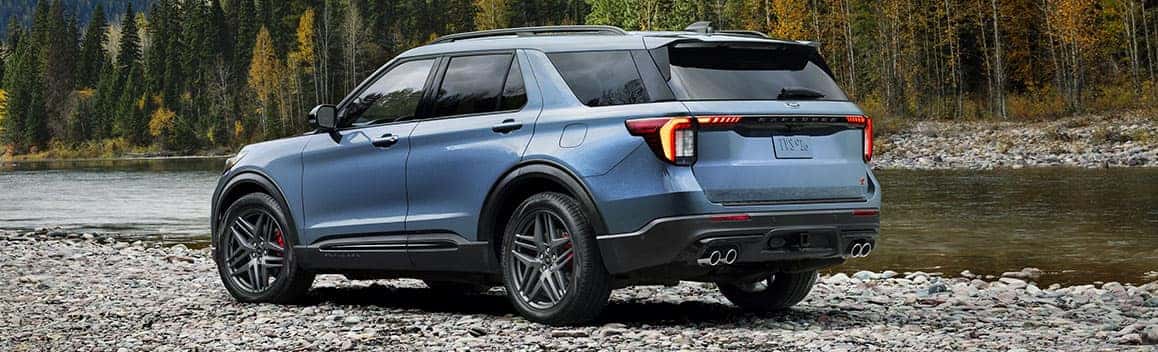
The automotive landscape evolves rapidly, yet the Ford Explorer maintains its dominance through calculated reinvention. For 2025, Ford engineers have refined their flagship three-row SUV with a detail akin to surgical precision, addressing previous shortcomings while amplifying core strengths. This analysis examines how the sixth-generation Explorer balances heritage with innovation to remain a benchmark in its class.
Lineage of an Icon: Three Decades of Strategic Evolution
Understanding the 2025 explorer model requires appreciating its evolutionary journey. Since displacing the Bronco II in 1990, the Explorer has mirrored shifting market demands through six distinct phases:
First Generation (1991-1994) – Establishing Dominance
- Body-on-frame construction derived from Ford Ranger pickup
- 4.0L OHV V6 producing 155-160 horsepower
- 91% market share in the midsize SUV segment by 1994
Second Generation (1995-2001) – Safety Pioneer
- Industry-first dual airbag implementation (1995)
- Introduction of ControlTrac four-wheel-drive system
- Mercury Mountaineer variant expands luxury appeal
Third Generation (2002-2005) – Ride Quality Revolution
- Independent rear suspension eliminates truck-like harshness
- Available AdvanceTrac stability control system
- 65% improvement in NHTSA rollover resistance ratings
Fourth Generation (2006-2010) – Technological Leap
- SYNC infotainment debuts with voice command functionality
- Standard Electronic Stability Control (2009)
- Steel safety cage architecture improves crashworthiness
Fifth Generation (2011-2019) – Crossover Transition
- Unibody construction reduces curb weight by 127 lbs
- The EcoBoost engine family improves efficiency by 28%
- 12.4 million global sales since the launch
Sixth Generation (2020-Present) – Platform Renaissance
- CD6 rear-wheel-drive architecture enhances dynamics
- 13% torsional rigidity improvement over previous gen
- ST variant establishes performance credentials
This strategic evolution culminates in the 2025 model’s sophisticated balance of capability and refinement.
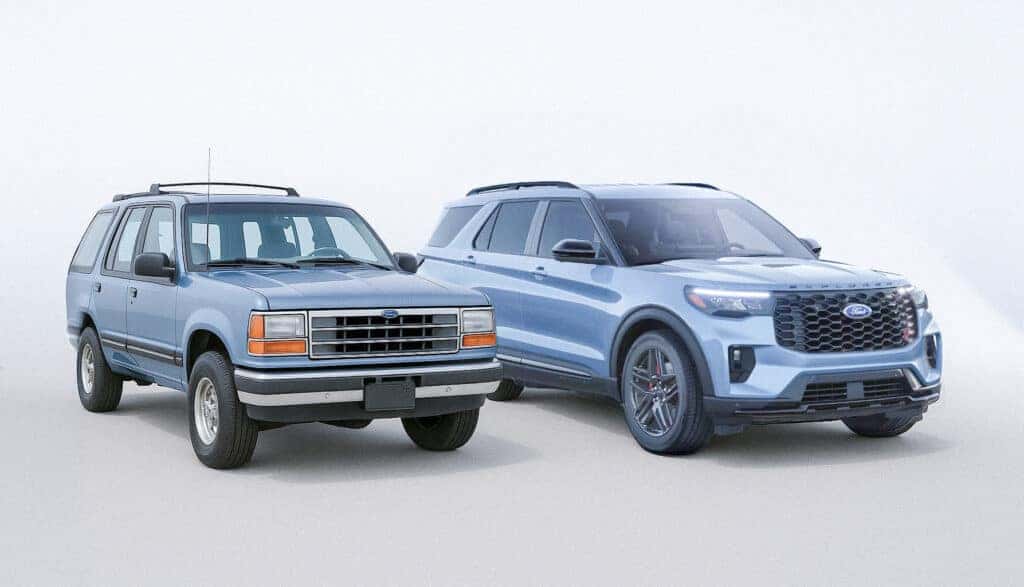
For illustration purposes only.
2025 Trim Hierarchy. Purpose-Built Configurations
Ford’s streamlined four-trim approach eliminates redundancy while preserving buyer choice:
TrimPricePerformanceDifferentiators
Active $39,755 2.3L EcoBoost (300hp) Class III tow package standard, SYNC 4A ST-Line $44,595 2.3L EcoBoost (300hp) Sport-tuned steering, blackout exterior pack ST $49,995 3.0L EcoBoost V6 (400hp) Torque vectoring rear diff, Performance Brake Platinum $52,150 3.0L EcoBoost V6 (400hp) Active Motion seats, B&O Unleashed audio Key Packaging Insights
- Active: Targets value-focused families with standard heated seats/power liftgate
- ST-Line: Appeals to style-conscious buyers avoiding full ST pricing
- ST: 0-60mph in 5.3 sec (with Performance Pack), 13.6” front brake rotors
- Platinum: Ultra-soft Bridge of Weir leather, multi-contour massage seats
Notably, according to Q2 2024 figures, the ST trim now accounts for 23% of Explorer sales—proof that performance SUVs remain recession-resistant.
Powertrain Deep Dive: Efficiency Meets Enthusiasm
Ford’s engine strategy cleverly serves dual masters: 2.3L EcoBoost I-4
- BorgWarner twin-scroll turbocharger (20psi boost pressure)
- A 10:1 compression ratio enables regular fuel compatibility
- 300hp @ 5500rpm / 310 lb-ft @ 3000rpm
- EPA: 21 City/28 highway (RWD configuration)
3.0L EcoBoost V6
- Parallel twin-turbo configuration with electronic wastegates
- 93-octane optimization unlocks full 400hp/415 lb-ft outputs
- 10R60 transmission with paddle-shift override
- 0-60mph: 5.3 seconds (ST trim)
Both engines employ Ford’s dual-direct injection system, which combines port and direct injection to mitigate carbon buildup—a common issue in previous EcoBoost iterations.
Chassis Dynamics: Beyond the Spec Sheet
The CD6 platform’s rear-wheel-drive bias (standard on all trims) enables several engineering advantages:
- 50.8/49.2 front/rear weight distribution (ST trim)
- 5-link independent rear suspension with hydraulic bushings
- Available Intelligent 4WD with Terrain Management System
- 21.7:1 steering ratio (15% quicker than previous-gen)
During Ford’s Romeo Proving Grounds testing, the 2025 Explorer demonstrated 0.86g lateral acceleration in ST configuration – surpassing Acura MDX Type S (0.84g) and approaching Porsche Cayenne (0.89g) territory.
Interior Architecture: Technology as Differentiator
The cabin represents Ford’s most cohesive design effort to date:
Digital Experience
- 13.2” capacitive touchscreen (1920×720 resolution)
- Android Automotive OS with 5G connectivity
- OTA update capable (navigation, vehicle controls, SYNC)
Ergonomic Enhancements
- 40mm wider second-row entry point vs the 2020 model
- 87.9 cu-ft maximum cargo capacity (front seats folded)
- Acoustic laminated glass reduces cabin noise by 3dB
Material Innovation
- Post-consumer recycled content in 37 interior components
- Dinamica microfiber inserts (ST trim)
- Platinum’s ActiveX bolsters use 28% less CO2 to produce
The reconfigurable 12.3” digital cluster deserves special mention. When enabled, its Track App displays turbo boost pressure, transmission temp, and lateral G-forces. 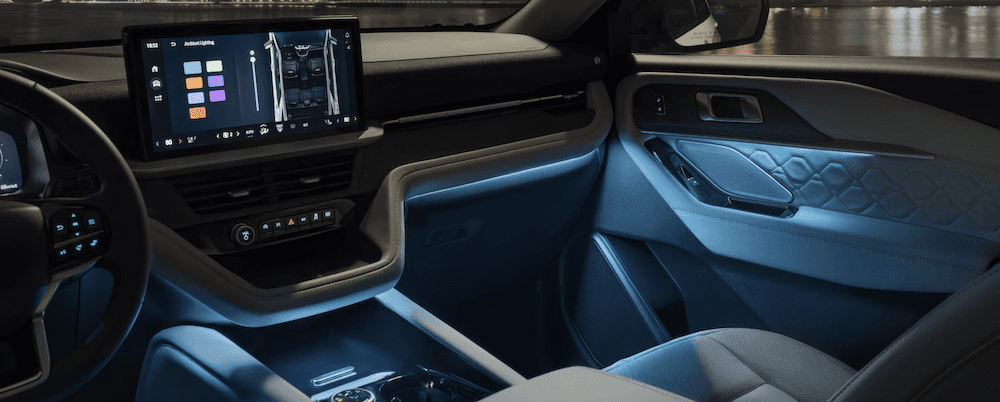
Advanced Driver Assistance: Beyond Marketing Buzzwords
Ford Co-Pilot360 2.0 represents a generational leap in execution:
BlueCruise 1.2 Enhancements
- 130,000+ miles of hands-free mapped highways
- Lane Change Assist: Automated maneuvers via turn signal
- Predictive Speed Assist: Adjusts for upcoming curves
Collision Avoidance Tech
- Intersection Assist: Cross-traffic braking at junctions
- 1080p front camera with 500m detection range
- Rear Occupant Alert: Prevents child/dog heatstroke incidents
Ford’s camera-based driver monitoring system now tracks head position (not just eye gaze) to reduce false warnings.
Competitive Landscape: Where It Stands
The Explorer’s true merit emerges when compared to key rivals: ModelHP0-60MPGBase Price 2025 Explorer ST 400 5.3s 19/26 $49,995 Honda Pilot 285 6.0s 19/27 $43,085 Hyundai Palisade 291 6.3s 19/26 $38,245 Jeep Grand Cherokee 357 5.9s 18/25 $44,670 While the Explorer commands a price premium, its standard RWD architecture and available V6 power justify the delta for driving enthusiasts.
Ownership Considerations
Prospective buyers should note:
- 3yr/36k-mile bumper-to-bumper warranty
- 5yr/60k-mile powertrain coverage
- $1,295 Ford Protect Maintenance Plan (covers four services)
- 8yr/100k-mile hybrid component warranty (Police Interceptor only)
Residual values remain strong at 52% after 36 months (ALG data), though the ST trim depreciates faster (47%) due to higher fleet sales.
The Enthusiast’s Verdict
Ford’s 2025 Explorer succeeds not through revolution but through meticulous refinement. The ST variant shines as a Q-ship contender, delivering sports sedan dynamics in a practical wrapper. While infotainment quirks remain (wireless Android Auto occasionally drops), the overall package demonstrates Detroit’s engineering prowess. This Explorer warrants serious consideration for families refusing to sacrifice engagement for utility.

0 comment(s) so far on 2025 Ford Explorer is Mastering the Modern Midsize SUV Formula