


Ford Hybrid Lineup Guide: PowerBoost, Maverick and SUV Options
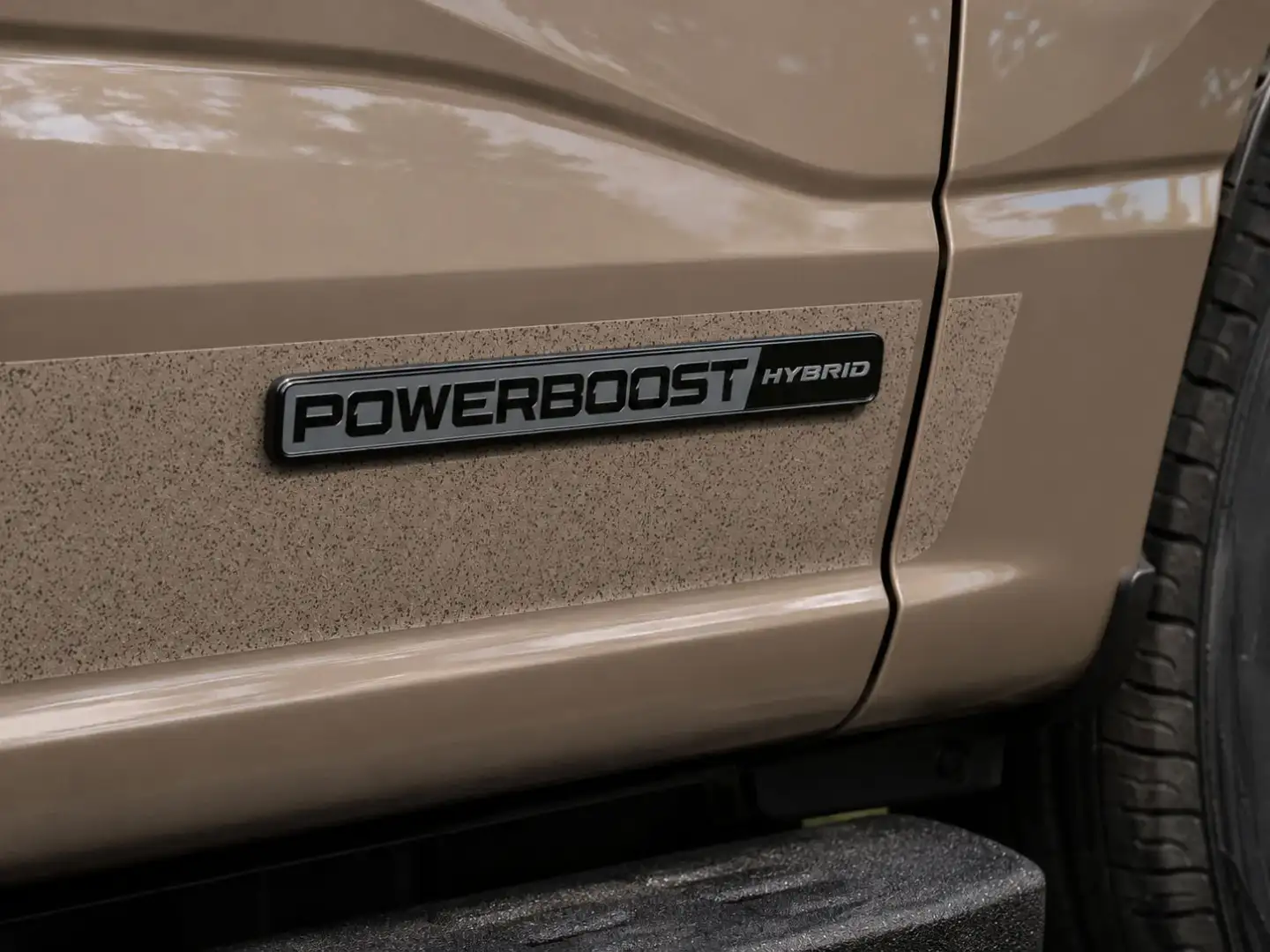
If you are comparing Ford hybrid trucks, start with two names: F-150 PowerBoost and Maverick Hybrid. Both combine gasoline and electric power, but they belong on different shopping lists. Your choice should begin with the size, passenger space, cargo and towing needs you have, not simply the word “hybrid.”
SUV shopping needs an extra check. Ford’s hybrid overview still lists Escape Hybrid and Plug-In Hybrid examples, while its dedicated Escape page now says the model is being discontinued. That makes actual model year and availability especially important.
This guide explains the differences, shows where PowerBoost fits and gives you questions to bring to Sturgis Ford. Lineup information was checked in November 2026. Ford is already promoting 2027 F-150 and Maverick models, so do not assume every feature on a current marketing page applies to a 2026 vehicle.
Images in this guide are for illustration purposes only.
Hybrid vs plug-in hybrid: what changes for you?
A full hybrid uses a gasoline engine, an electric motor and a battery. The vehicle manages how those work together. Regenerative braking recovers some energy during slowing and uses it to recharge the battery.
A plug-in hybrid, or PHEV, also combines gasoline and electric power, but it can connect to an external charger. That makes access to charging part of the shopping conversation.
An all-electric vehicle is a different category. Do not assume an “electrified” inventory label means every vehicle shown is a hybrid, or that every hybrid needs a charging station.
For the Ford trucks covered here, PowerBoost and Maverick Hybrid are full hybrids, not plug-in hybrids. You refuel them with gasoline rather than plugging them into a charging station.
If you want more background before comparing models, our guide to how hybrid vehicles work covers the basics. Here, the focus is on choosing among Ford vehicles and checking the equipment that matters to you.
What is Ford PowerBoost?
PowerBoost is Ford’s name for the F-150’s available 3.5-liter full-hybrid V6 powertrain. It combines gasoline power with an electric motor and hybrid battery.
It is not a separate truck model, and it is not a label for every F-150. You need to verify the powertrain on the specific vehicle you are considering. A familiar trim badge does not establish that the truck is a hybrid.
It is also not a plug-in version of the F-150. Do not buy it expecting to charge at home and drive a guaranteed number of miles on electricity before the engine starts. That is a different buying goal from choosing a full hybrid.
A useful way to approach PowerBoost is to ask what you need your F-150 to do first. Then compare a PowerBoost-equipped truck with a similarly configured gasoline alternative. Keep cab layout, equipment and intended use as consistent as possible so you are comparing more than two names.
PowerBoost vs EcoBoost
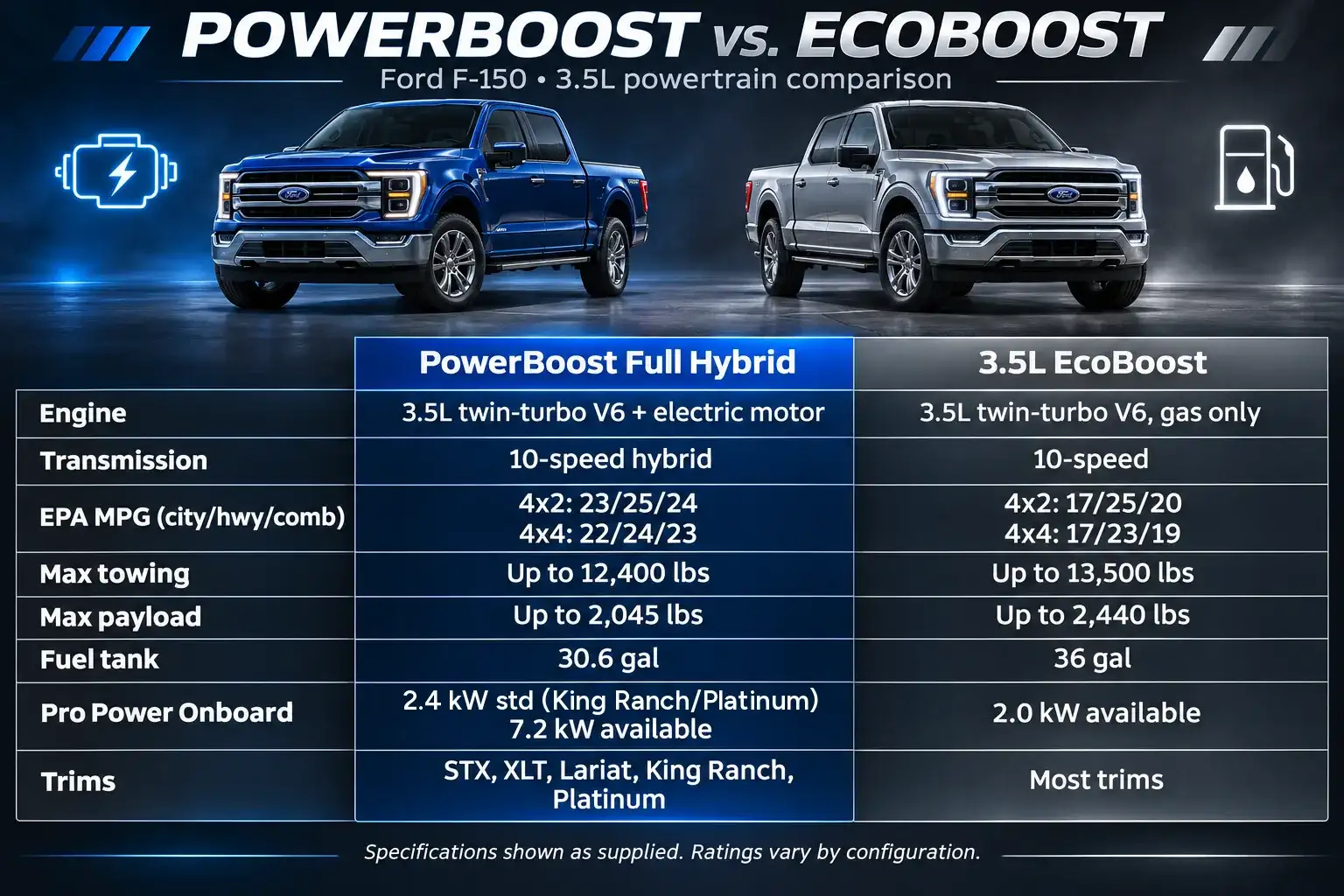
EcoBoost identifies Ford gasoline engine technology. PowerBoost identifies the full-hybrid F-150 powertrain. The names sound similar, but “EcoBoost” alone does not mean the truck is a hybrid.
Neither label tells you everything about towing, fuel costs or the equipment on a particular vehicle.
| Question | PowerBoost comparison | EcoBoost comparison |
|---|---|---|
| What powers the truck? | Gasoline engine plus a hybrid electric system | A gasoline engine |
| Does the name mean plug-in charging? | No | No |
| What should you verify? | Exact hybrid configuration, equipment and ratings | Exact engine, configuration, equipment and ratings |
| How should you compare towing? | Use the correct model-year guide and vehicle information | Use the same process |
| How should you compare cost? | Actual purchase figures and your driving assumptions | Equivalent figures and the same assumptions |
Avoid comparing a well-equipped hybrid with a differently configured gas truck and attributing the whole difference to the powertrain.
If towing is your main concern, begin with the trailer and its loaded weight. If fuel costs are the main concern, begin with your annual mileage and mix of driving. If onboard electrical power is the attraction, compare the actual system fitted to each vehicle.
Those questions lead to a more useful answer than declaring one engine name universally better.
F-150 PowerBoost for work, weekends and towing
Start with your truck requirements
A PowerBoost F-150 may belong on your shortlist if you want to explore hybrid power in an F-150 configuration. That does not remove the need to check the things you would check on any truck.
Measure the cargo you regularly carry. Think about passenger seating, bed access and where you park. If you are replacing an existing truck, bring a list of what works and what you would change.
For work use, describe the equipment you carry rather than asking only whether a truck is “heavy duty enough.” For recreation, bring the trailer information instead of relying on a photo or an empty-weight estimate.
The hybrid system is one part of the purchase. It should not distract from whether the vehicle fits the job.
Pro Power Onboard

Available Pro Power Onboard can provide electrical outlets for compatible equipment. System output and equipment vary, so verify the rating on the truck rather than assuming all PowerBoost models are identical.
Before choosing a vehicle for this feature, write down what you plan to connect. Include the device requirements and which items you expect to use at the same time. Ask for a demonstration of the fitted system and its limits.
Follow the owner’s manual for setup, ventilation, electrical loads and operation. Do not assume a truck outlet can safely power any tool, appliance, camper or building connection. Have the specific application checked before relying on it.
This is especially worth discussing if onboard power is a major reason you are considering the hybrid rather than simply an extra feature you might occasionally use.
Towing a camper or work trailer
A properly equipped F-150 PowerBoost can tow within its applicable ratings. The answer for your camper or trailer depends on the exact truck and loaded combination.
Ford’s towing guidance makes clear that configuration and payload matter. Passengers, cargo, accessories and trailer tongue load must all be accounted for. A headline maximum for the F-150 lineup is not the rating of every F-150.
Bring the trailer’s weight information and describe how you actually load it. Ask for a comparison using the correct model-year towing guide, the truck’s labels and the necessary hitch and towing equipment.
If a combination does not fit the limits, choosing a hybrid badge does not change that. Establish suitability before discussing which available configuration you prefer.
Other Ford hybrid trucks and SUV options
Maverick Hybrid
Maverick offers another route into a Ford hybrid pickup. Ford’s 2026 Maverick information lists a 2.5-liter hybrid powertrain and available all-wheel drive. Hybrid and non-hybrid configurations exist, so check the exact vehicle rather than assuming every Maverick is the same.
Start your Maverick comparison with how you will use the truck bed, how many people you carry and your parking needs. If a trailer is part of the plan, verify the equipment and rating on that particular truck.
For a deeper look at the two powertrain choices within this model, see Belle Fourche Ford’s Maverick Hybrid vs EcoBoost comparison. This lineup guide does not replace that model-specific comparison.
Escape Hybrid and Escape Plug-In Hybrid
Escape needs careful wording during the lineup transition. Ford’s hybrid overview includes both a hybrid Escape and a plug-in hybrid Escape, but the dedicated Escape page says Ford is discontinuing the SUV.
If you are interested in one, ask about actual remaining new inventory or used vehicles. Do not assume a vehicle is available to order simply because an older model page or search result is still online.
When comparing examples, verify whether the vehicle is a conventional hybrid or a plug-in hybrid. For a plug-in, discuss your charging access, the vehicle’s equipment and the information that applies to its exact model year.
This guide does not promise Escape availability at Sturgis Ford. Confirm the vehicle and its current status before making plans to visit.
What about Explorer Hybrid?
An older Explorer Hybrid search result is not evidence that a new retail Explorer Hybrid is currently offered.
Ford’s 2026 retail Explorer information lists EcoBoost gasoline engines. This guide therefore does not present Explorer Hybrid as a current new-retail option. If you are looking at a used Explorer, verify the year and powertrain on that individual vehicle.
The same approach applies to any familiar Ford name. Check current model-year information rather than assuming a past hybrid version continues unchanged.
Questions to ask before buying a Ford hybrid
What am I actually comparing?
Write down the model year, trim, engine, drivetrain and equipment for each vehicle. Ask for the window sticker where available.
A comparison becomes less useful when one price includes equipment that the other vehicle does not have. Separate the features you require from the features you would simply enjoy.
How do I drive in a typical month?
Estimate your annual mileage and describe your usual trips. Include commuting, longer drives, towing and other regular use.
If you compare fuel costs, use the official rating for each exact configuration and the same fuel-price assumptions. Treat the result as an estimate, not a promise about what you will spend. Ask what would change if your mileage or fuel prices differ from your estimate.
What does ownership cost beyond fuel?
Ask for the actual purchase figures, insurance quotes and maintenance schedule. If you are comparing a used hybrid, include its condition, service records and any inspection findings.
Do not use a general statement about hybrids to dismiss a concern about an individual vehicle. Likewise, an online complaint about a different model year does not establish what will happen to the one you are considering.
What coverage applies to this vehicle?
Request the warranty information for the specific vehicle and confirm any remaining coverage. Ask which hybrid components are covered, what conditions apply and when coverage began.
A warranty term is not a prediction of battery life. It should be one part of an ownership decision, not a replacement for examining the vehicle and understanding its history.
What should I check on a test drive?
Drive the configuration you are seriously considering. Evaluate seating, visibility, parking and the feel of the vehicle in normal use.
Ask for an explanation of the hybrid displays and controls while parked. If an unfamiliar sound, warning or behavior concerns you, raise it with the dealer rather than deciding from an online description that it must be normal.
For a truck, inspect the bed and access points. For an SUV, try the passenger seating and cargo layout. A powertrain comparison cannot answer those practical fit questions for you.
Ford hybrid and PowerBoost FAQs
What vehicles does Ford make as a hybrid?
F-150 PowerBoost and Maverick Hybrid are the truck options covered here. Ford also lists Escape Hybrid and Plug-In Hybrid information, while announcing Escape’s discontinuation. Check remaining new or used availability rather than assuming every listed vehicle can be ordered.
Is PowerBoost a hybrid?
Yes. It is Ford’s available 3.5-liter full-hybrid V6 powertrain for the F-150. It is not a plug-in hybrid.
How long will an F-150 hybrid battery last?
There is no single lifespan this guide can promise for every battery and vehicle. Review the specific vehicle’s history, inspection findings and applicable warranty terms. Ask a qualified service professional about any battery-related concerns before buying a used example.
What are common F-150 hybrid problems?
A useful answer needs a model year, vehicle history and, where relevant, a VIN. Check applicable recalls, completed repairs and current diagnostic findings. This guide does not label an issue “common” based on forum posts or treat all PowerBoost model years as identical.
Does PowerBoost require premium gas?
Follow the fuel instructions for the exact model year. Ford’s 2026 F-150 information specifies a minimum of 87 octane for the 3.5-liter full hybrid. Check the owner’s manual for performance recommendations and operating conditions rather than assuming the minimum is the entire guidance.
How far can PowerBoost drive on electricity alone?
Do not plan a commute around a guaranteed electric-only distance. PowerBoost is a full hybrid, not a plug-in vehicle with a rechargeable electric-range target. The vehicle manages gasoline and electric operation. Ask for a demonstration and the model-specific owner’s guidance.
Is PowerBoost or EcoBoost better for towing?
Compare the actual trucks against your loaded trailer and towing requirements. Model year, configuration and equipment matter. The hybrid label alone does not establish the higher tow rating or the right match.
Can PowerBoost tow a camper?
It can tow a camper that fits the properly equipped truck’s ratings and all applicable limits. Check loaded trailer weight, tongue load, passengers, cargo and required equipment before deciding.
Is PowerBoost worth it?
That depends on the purchase comparison and what you value. Work through fuel assumptions, towing suitability, equipment, onboard power needs and ownership costs. There is no guaranteed payback period that applies to every driver.
Explore Ford hybrids at Sturgis Ford
Tell us what you drive now, what you need your next vehicle to do and whether you are comparing F-150 PowerBoost, Maverick Hybrid or an SUV.
Sturgis Ford can help you review specific vehicles, their equipment and availability. Bring your trailer information if you tow and your equipment requirements if onboard power matters. The next step is a comparison built around your use, not a promise based on a badge.
Browse new Ford F-150 inventory at Wareing Sturgis Ford, including available PowerBoost Hybrid configurations, then bring your questions to the showroom.

0 comment(s) so far on Ford Hybrid Lineup Guide: PowerBoost, Maverick and SUV Options